Journey 1 · Community & Belonging
Where We Make a Home
How does a place become ours—and what do people give to keep it alive?
This journey has five stops. At each one, notice something, investigate what it means, and decide what—if anything—you want to carry forward.
Look closely. Listen if you like. Save a thought—or simply keep moving.
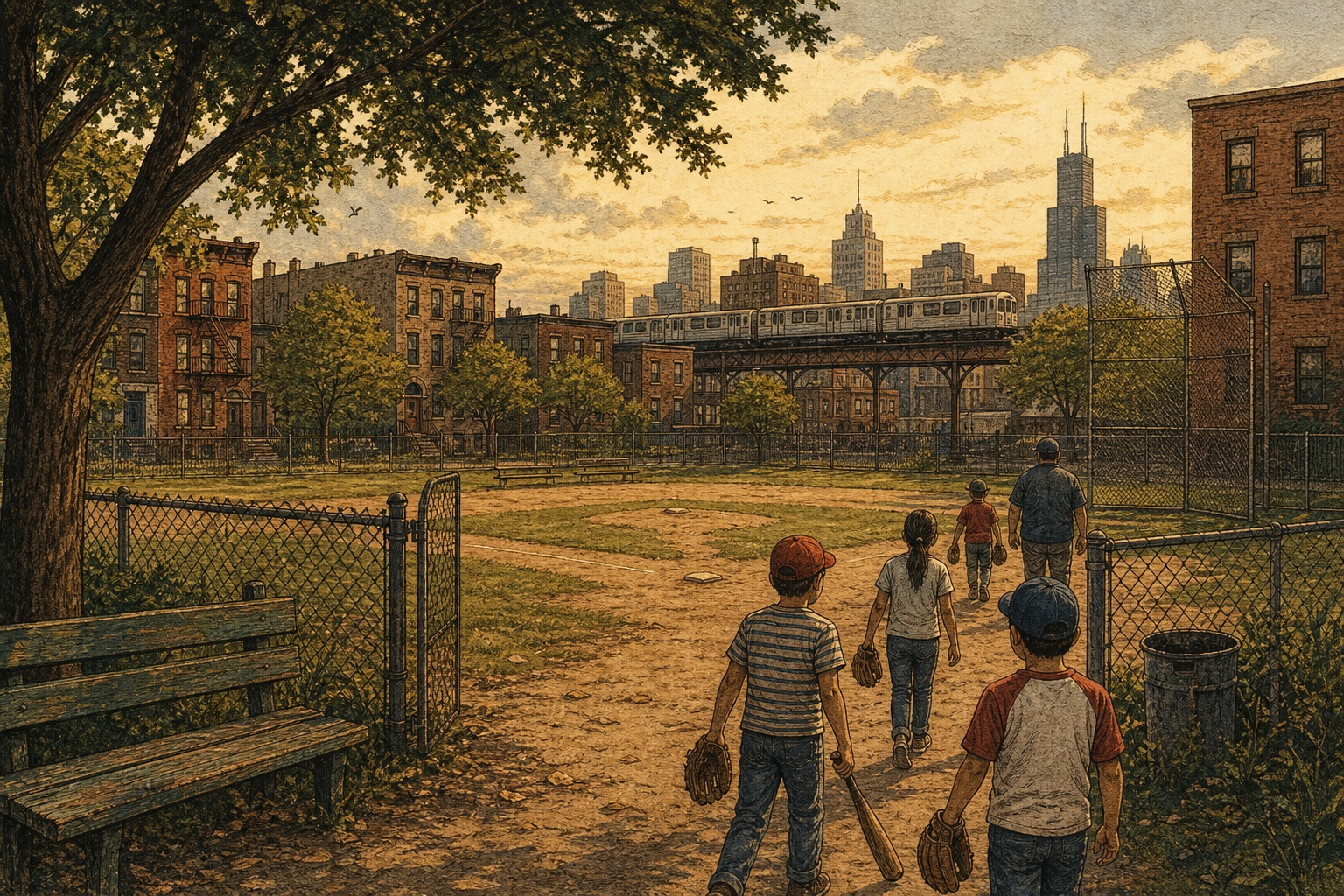
Five stops along the way.
Begin with the first stop, or choose any stop below. The path starts with people making a field and ends with belonging carried forward. Every response is optional.
Stop 1
A Field Becomes
Our Place
A field is more than open ground. People make it playable. They mark its edges, agree on rules, bring equipment, organize time, and return. In the early twentieth century, public-playground advocates also argued that shared recreation could help shape neighborhood life.
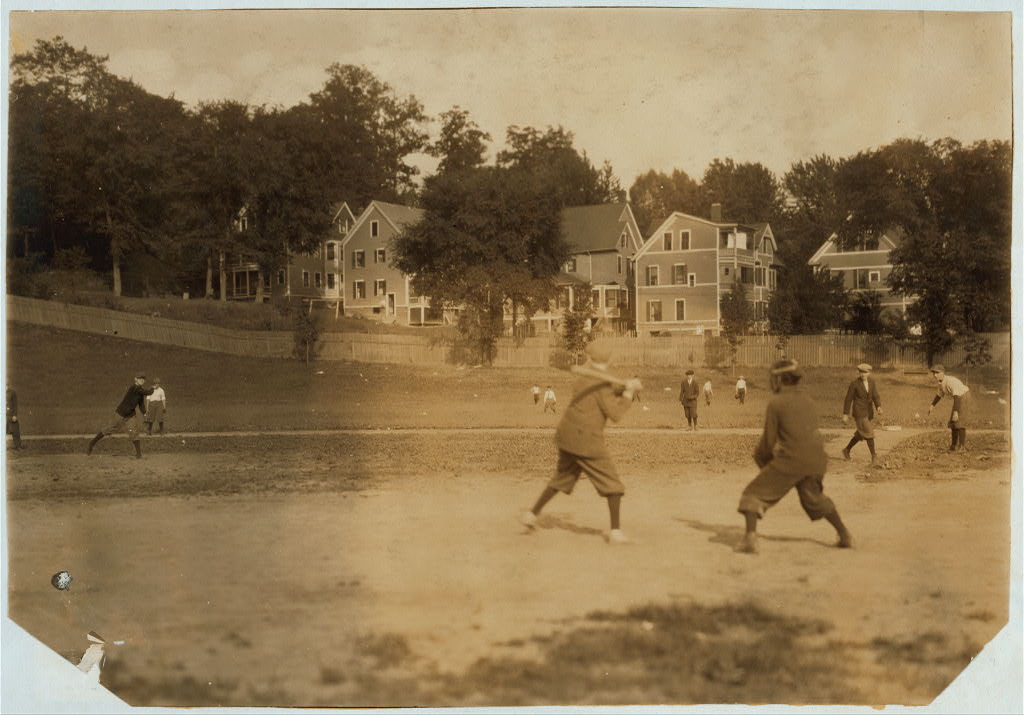
Take in the whole photograph. Then choose one small detail that tells you how this space is being used.
What have the players done to make this ground into a field?
Who else—or what else—would be needed to keep this place usable?
American Life · Civic-reform book
Community Center Activities
Clarence Arthur Perry described public playgrounds and organized recreation as part of community life. The book shows what one reformer hoped shared recreation could do—not whether every playground welcomed everyone equally.
Look closer at the photograph
Observe Scan the people, equipment, edges, background, and arrangement. What can you point to directly?
Reflect What looks planned? What looks improvised? What might be happening outside the frame?
Question Who decided this ground could be used for play? Who maintained it? Who may not appear?
Investigate Compare the image with the 1916 book. Which ideas can the photograph support, and which remain only hopes?
Stop 2
A Team Becomes
a Home
A team can give people a shared name and a way to represent where they come from. Uniforms, portraits, trophies, travel, and newspaper stories help turn individual players into a public “we.”
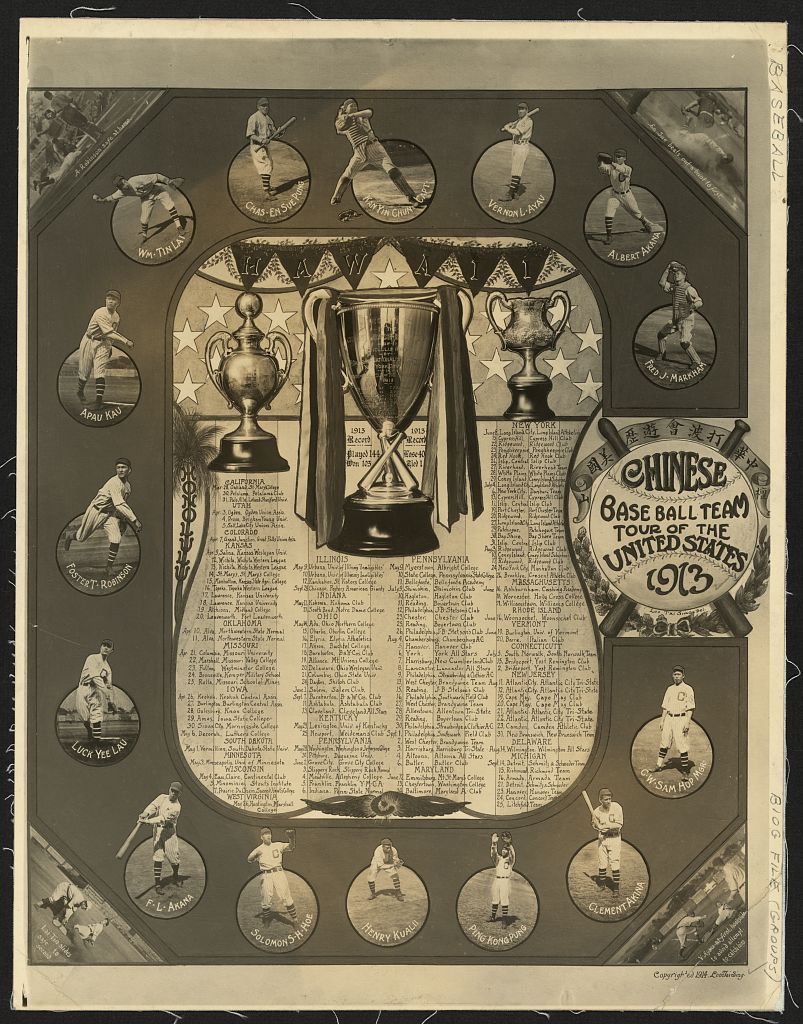
This is not a single moment caught during a game. Someone arranged these portraits, words, opponents, and trophies into one public image.
How does this team choose to present itself?
How can a team carry a community’s identity when it travels?
American Life · The Hawaiian Star, July 6, 1908
Five years before the tour, this Honolulu newspaper described baseball as a major outdoor sport and noted Chinese and Japanese teams. It places the touring team inside a larger local baseball world.
Open the original newspaper pageLook closer at the montage and newspaper
Observe Notice names, clothing, repeated shapes, trophies, opponents, scale, and placement.
Reflect Who was likely meant to see this? What kind of achievement does the design emphasize?
Read Where does the baseball account appear? What does the paper assume readers value?
Investigate What can the newspaper explain that the montage cannot? What can the montage communicate without words?
Stop 3
A Community
Builds Its Own
Black baseball was a world of competition, enterprise, work, culture, skill, and joy. In 1924, the champions of the Negro National League and the Eastern Colored League met in the first Colored World Series. The event depended on far more than the players visible on the field.
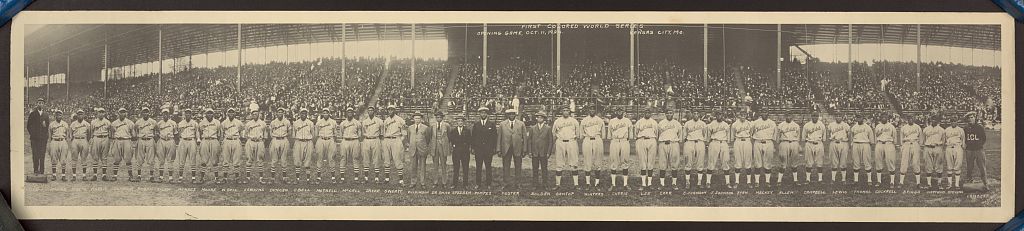
Begin at one edge and travel slowly across the photograph. Notice how many people and roles fit inside one event.
What had to be built, organized, or sustained before this photograph could happen?
What does the newspaper ask its readers to care about?
Segregation excluded Black clubs from white organized baseball. Black communities did not wait without a baseball world. Owners, players, managers, workers, journalists, fans, and local businesses built and sustained institutions of their own.
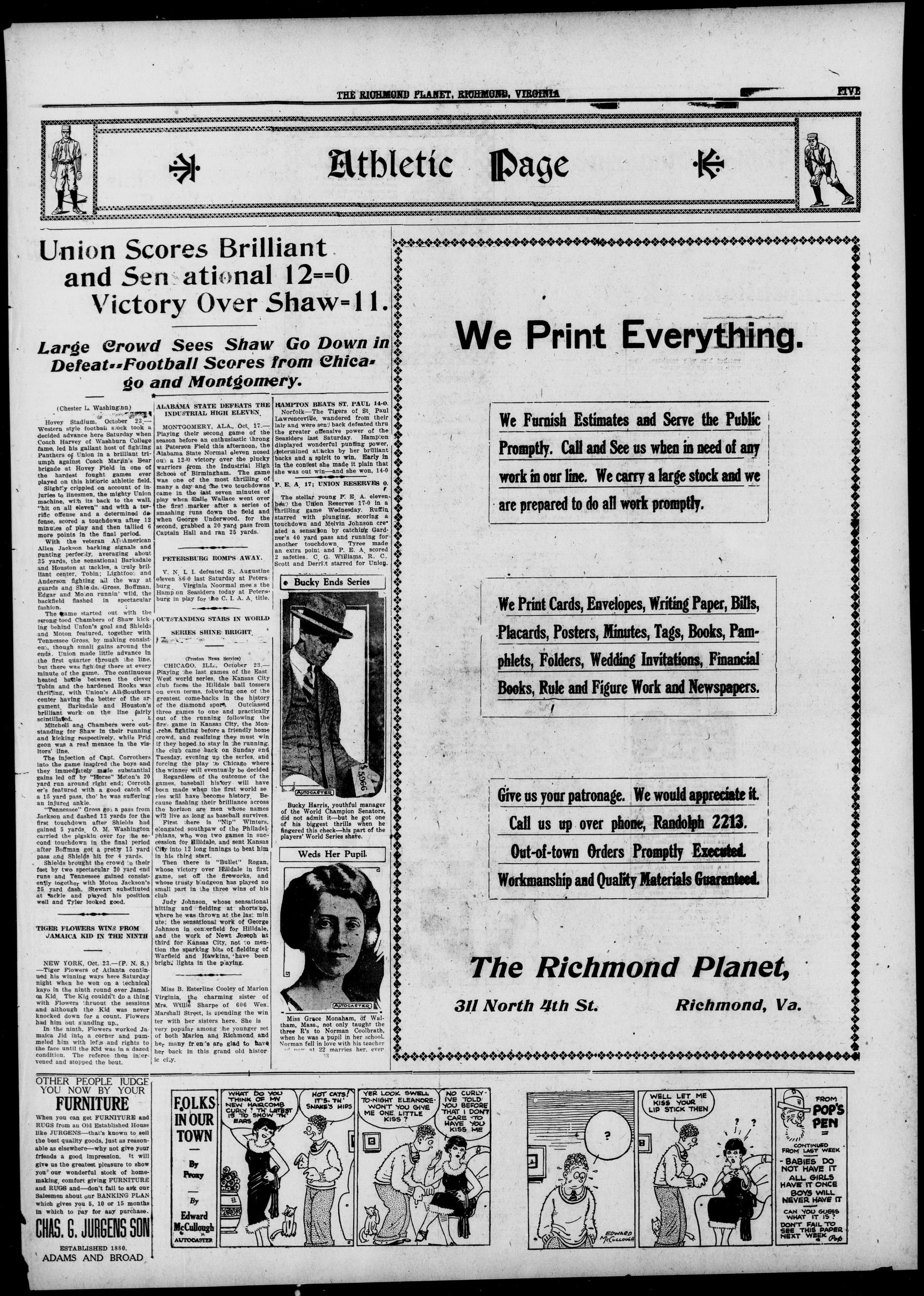
Look closer at the panorama and Black press
Observe Identify players, officials, spectators, uniforms, signs, seating, and the photograph’s enormous width.
Reflect What does the crowd suggest? What kinds of labor remain outside the frame?
Read Notice the headline, athletics-page placement, wire credit, named players, and language of competition.
Investigate Trace one supporting institution—league, club, press network, ballpark, travel system, or local business.
Stop 4
A Ballpark Becomes
a Civic Space
These two photographs were made in 1942. Both show people gathering around baseball. They do not show the same freedom. To understand a public place, we have to look not only at what happens there, but also at who controls access and movement.
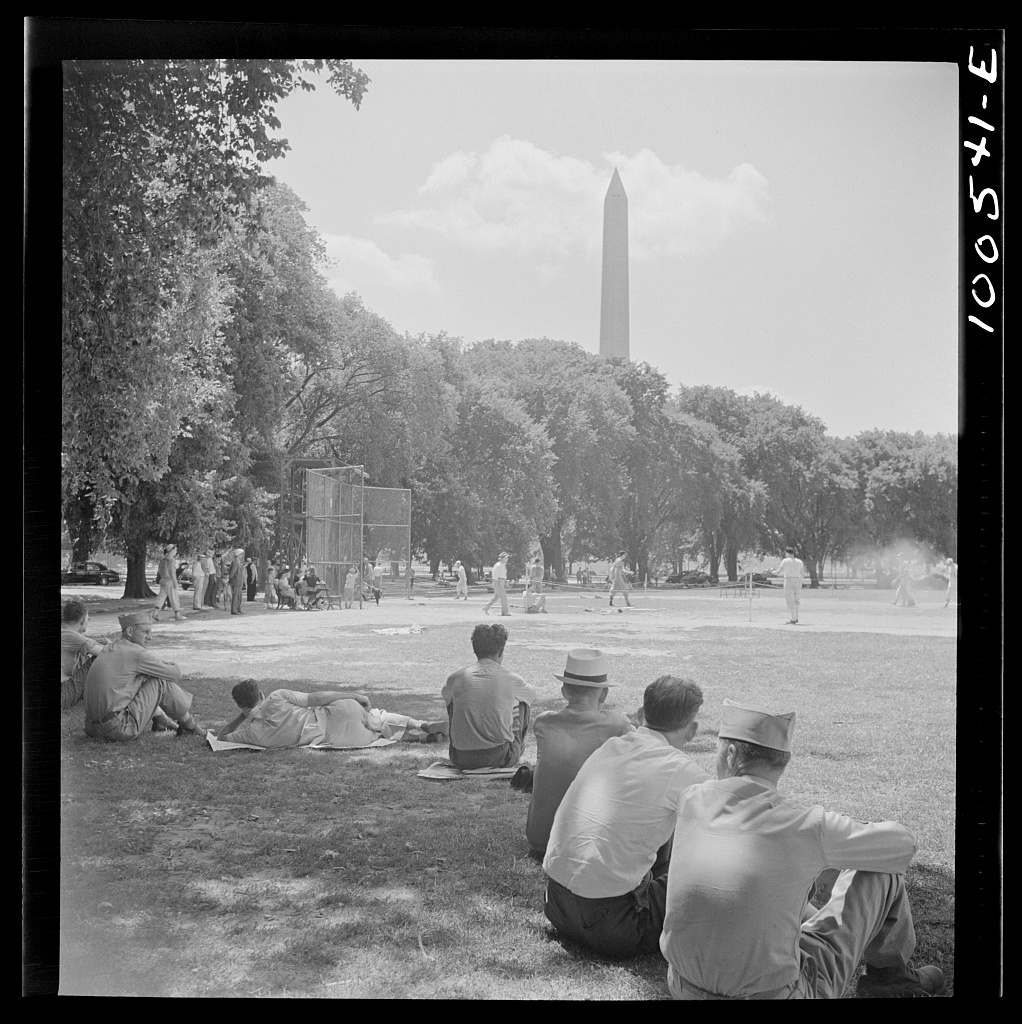
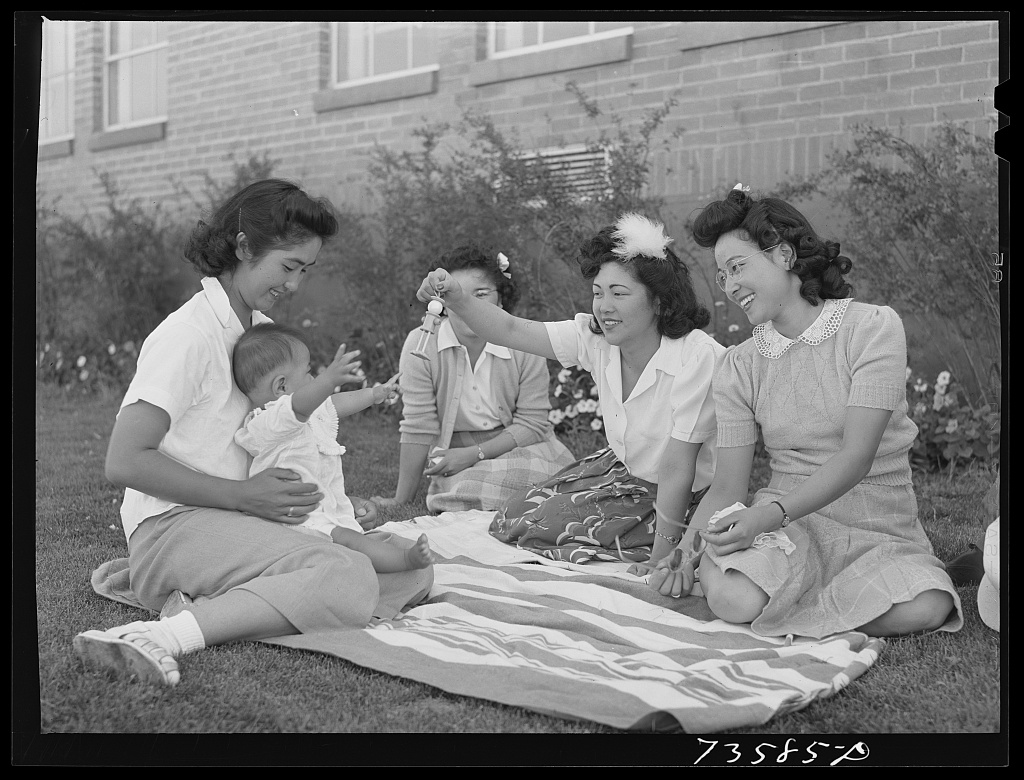
Read the records around the photographs
In 1942, Executive Order 9066 enabled forced removal and incarceration of Japanese Americans. The Nyssa catalog record describes supervised movement from a labor camp into town. Baseball and gathering were real—but so were the controls surrounding them.
What changes when the record tells us who controlled access to the field?
When is a public place truly shared—and shared by whom?
Look closer at the paired photographs
Observe List only what is visible—people, activity, setting, distance, arrangement, and expressions.
Reflect What appears ordinary? What is absent from the frame?
Read Which essential facts come from captions and context rather than the images?
Question Who could arrive freely, leave freely, set the schedule, or decide how the space was used?
A careful comparison: These workers did not live under equivalent conditions. The two photographs ask how the same pastime could occupy radically unequal civic circumstances at the same moment.
A gathering ends. A season passes. What remains may be a ritual, an object, a photograph, a voice, or the feeling that one place has become part of a life.Next: Belonging Is Carried ForwardStop 5
Belonging Is
Carried Forward
Some places stay with us because we return to them. They become tied to people we love, rituals we repeat, losses we carry, and moments of joy. An oral history lets one person tell how a public place became part of a life.
Personal oral history · 60–90 second edited excerpt
Suzy Evans’s Wrigley Field oral history
Title to be developed after recording. The finished account will be prepared but told naturally, not read from a script.
Source direction secured · recording and transcript pending
One object or photograph will sit here.
It will be selected because it deepens Suzy’s story—not simply to fill the space. Provenance, permission, credit, and descriptive text will accompany it.
As you listen, notice when the ballpark becomes more than a setting. What relationships, feelings, or repeated actions give the place meaning over time?
What turns a place into “your place”?
Look closer at an oral history
Listen Notice pace, tone, emphasis, and emotion. Which moments feel especially significant?
Reflect What can the speaker know from lived experience? What remains outside one person’s story?
Question memory How can memory carry meaning even when it does not supply every historical detail?
Investigate What photographs, programs, maps, family records, newspapers, or other voices could place the story in a wider history?
Five traces of belonging
At A Field Becomes Our Place, people turned open ground into somewhere to gather. In A Team Becomes a Home, players presented a public “we.” A Community Builds Its Own revealed the labor and institutions behind a championship. A Ballpark Becomes a Civic Space asked who was free to share public life. Belonging Is Carried Forward brought the journey into one person’s memory of a place.
Across every stop, belonging required something from people: time, work, care, organization, attention, memory, or return.
Which kind of contribution became easier to see as you moved through the journey?
Locate yourself
Think of a place that has become part of your life.
It might be a field, park, porch, library, block, kitchen, place of worship, club, school, ballpark, or somewhere else entirely. Name it as specifically—or as privately—as you wish.
Optional doors
Continue the Journey
Continue with a book, archive, museum, local place, saved resource, or another path you choose. These doors are starting points, not extra assignments.
A town makes room for a game
What can one sandlot reveal about how a growing town makes room for play?
A team in a temporary home
How can people form routines in a place they may not control?
A teenager, a pennant, and a ballpark
What did Rickwood hold for Willie Mays, the Black Barons, and the community that came to watch?
Read power beside a photograph
What can an official order explain—and what can’t it?
How a community enters an archive
Who decides that an everyday story belongs in a national collection?